Segmentation
29-class body-part segmentation, trained on Shutterstock Goliath.
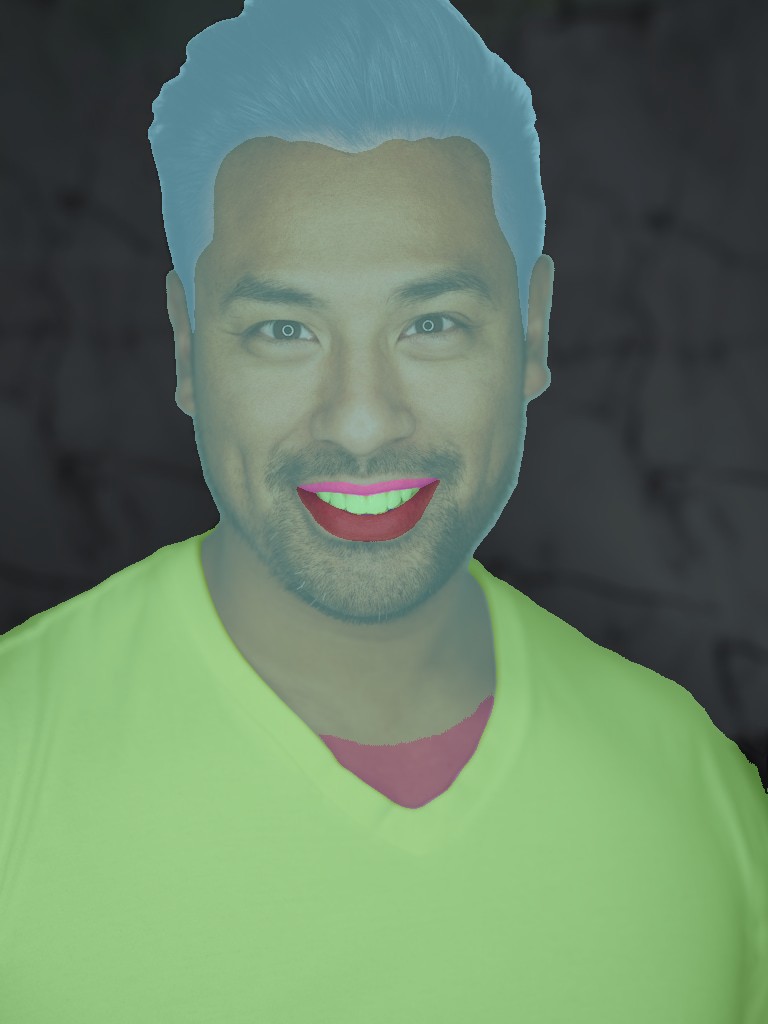
sapiens_seg output (0.4b) — colored body-part labels blended with inputClasses
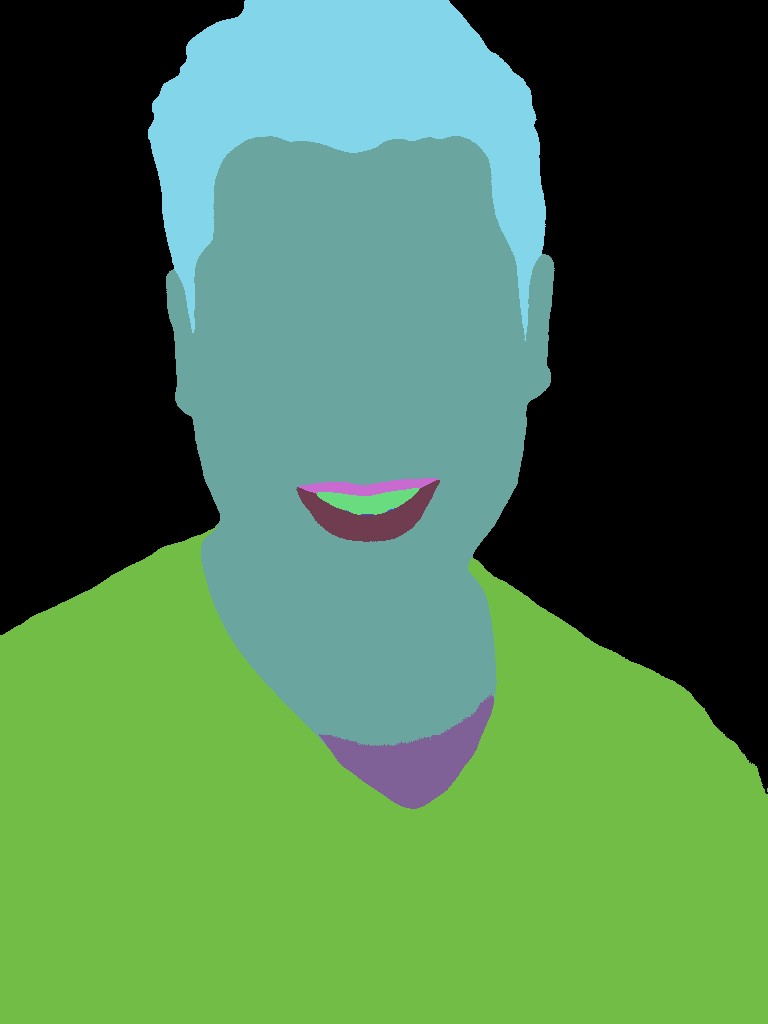
Head, face, hair, torso, upper/lower arms, hands, upper/lower legs, feet, plus finer face parts (eyes, mouth, ears, brows). See the Sapiens2 repo for the full 29-class palette.
Signature
sapiens_seg(
    input_path:  str,          # file OR directory
    output_dir:  str,
    model_size:  str = "0.4b", # 0.4b | 0.8b | 1b | 5b
    device:      str = "cuda:0",
    save_pred:   bool = True,  # also write ._seg.npy label maps
) -> dict
Minimal example
from strands_sapiens import sapiens_seg

sapiens_seg(
    input_path="person.jpg",
    output_dir="out/",
    model_size="0.4b",
)
Output:
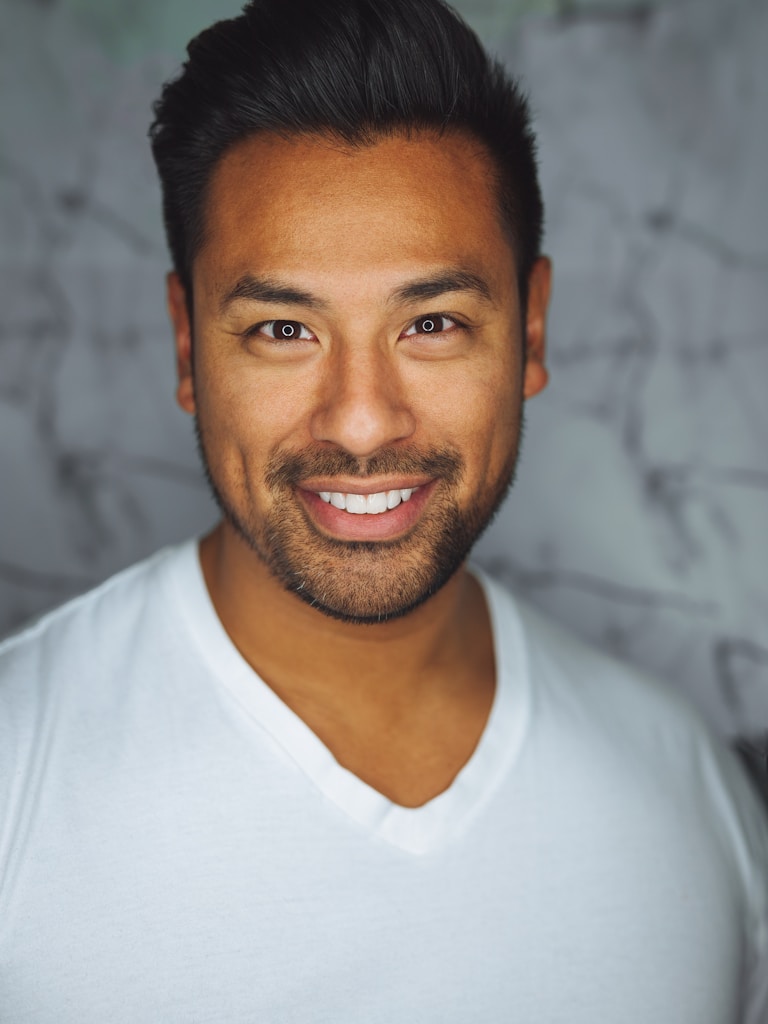
out/person.jpg- side-by-side input vs. colored segmentationout/person_seg.npy-H×Wintlabel map
Loading the raw prediction
import numpy as np
labels = np.load("out/person_seg.npy")
print(labels.shape, labels.dtype, labels.min(), labels.max())
# e.g. (1024, 768) int64 0 28
From an agent
Tips
- Smallest good size:
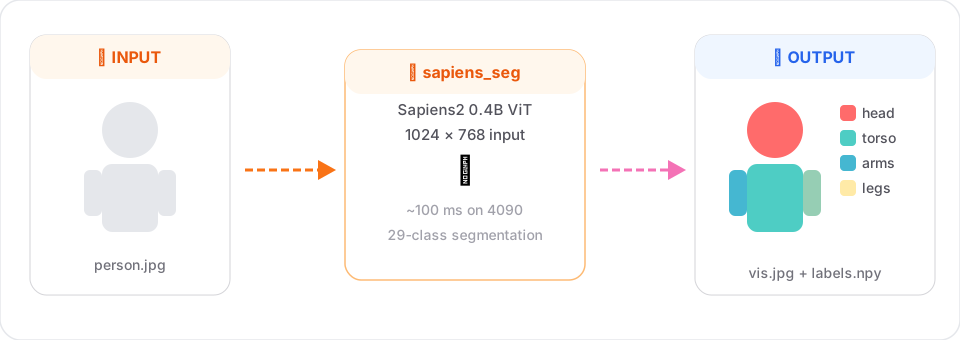
0.4bgives sharp boundaries on a single 1024×768 image in ~100ms on a 4090.
- For print/poster use: jump to
1bor5b- the edge quality difference is visible on hands and hair. - Batch: pass a directory for
input_path. Currently processes images sequentially; batch mode is on the roadmap.
Troubleshooting
Missing checkpoint: .../sapiens2_0.4b_seg.safetensors→ Download it.No config found for task=seg ...→ Your installedsapienspackage version is newer than this wrapper knows about. The wrapper falls back torglob("sapiens2_0.4b_seg*.py")undersapiens/dense/configs/seg/- if that still fails, open an issue with yourpip show sapiensoutput.