Robot world models
This is why strands-diffusers exists. A world model doesn't just paint a believable future — it predicts the robot actions that produce it. NVIDIA Cosmos is the headline: one call returns a future video, an optional sound track, and a normalized action tensor your controller can run.
Every clip below is a real nvidia/Cosmos3-Nano rollout (bf16/cuda) from a
single use_diffusers call — not a placeholder.

Action-policy rollouts
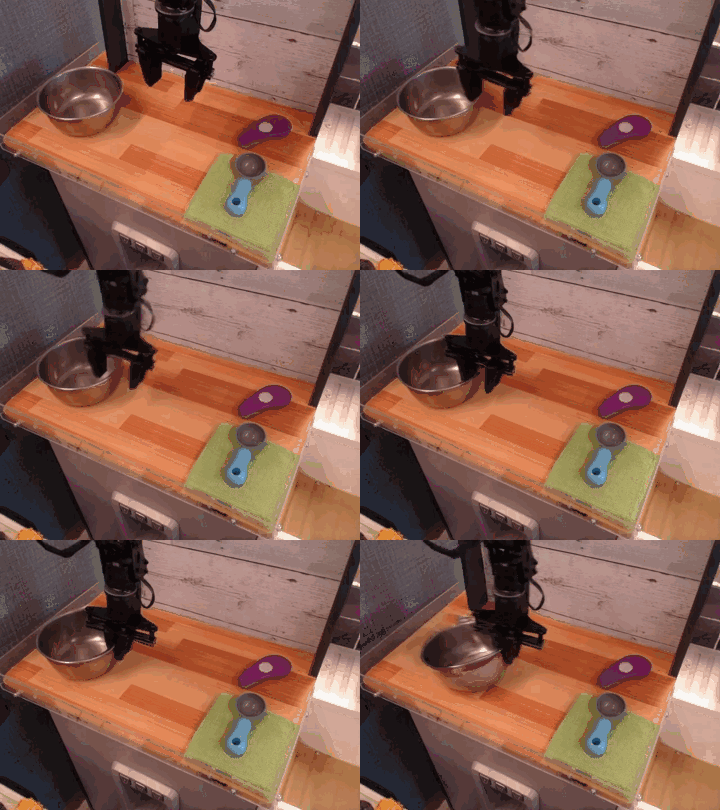
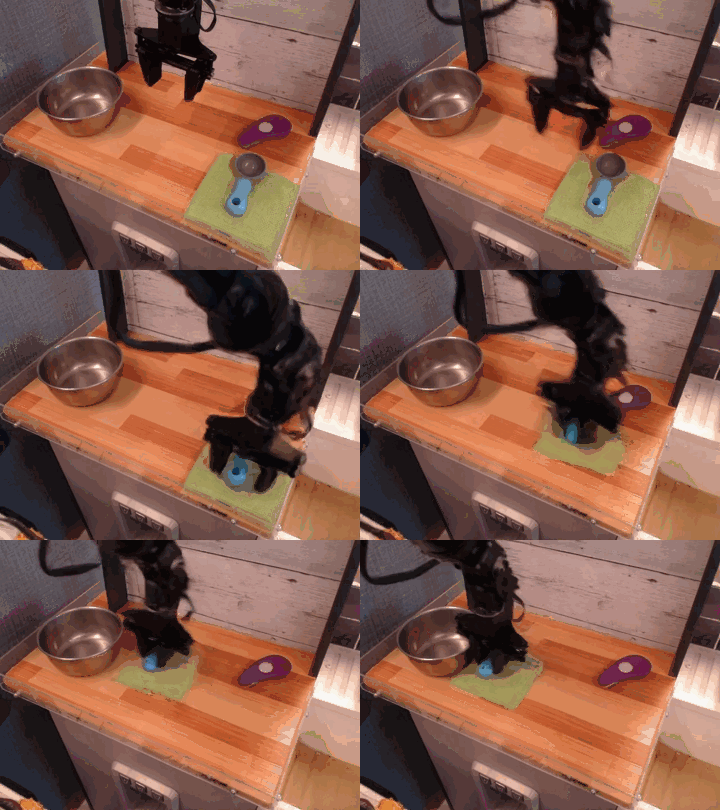
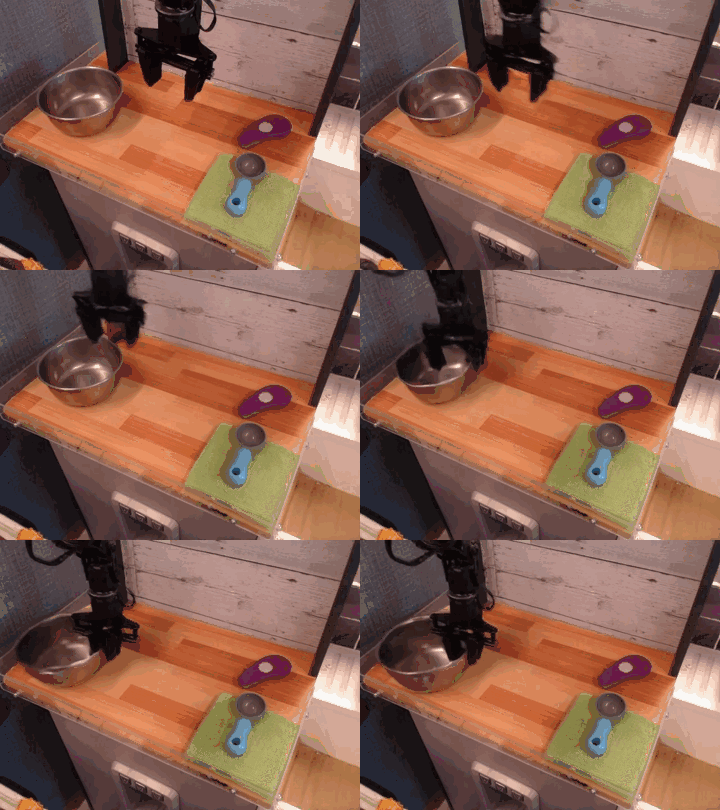
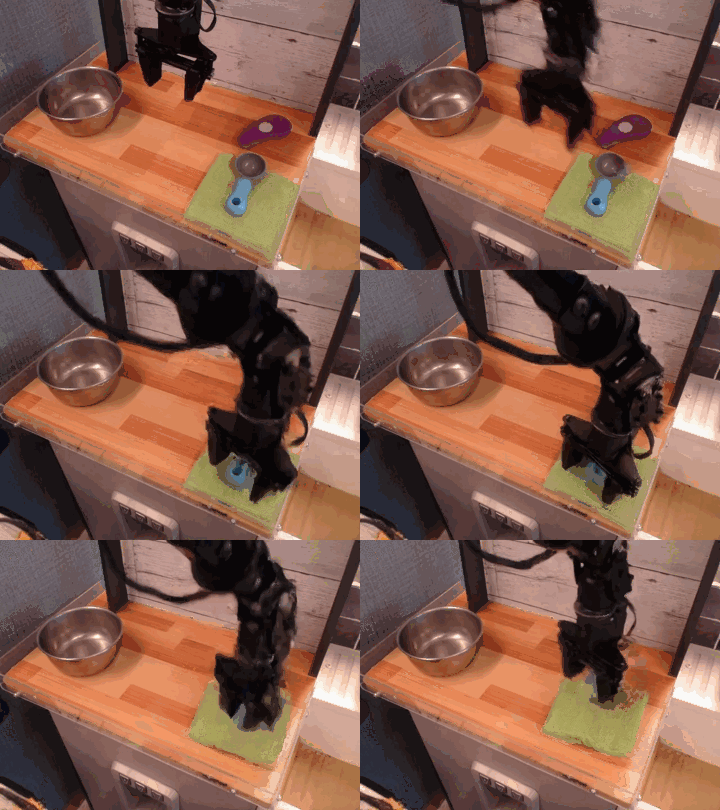
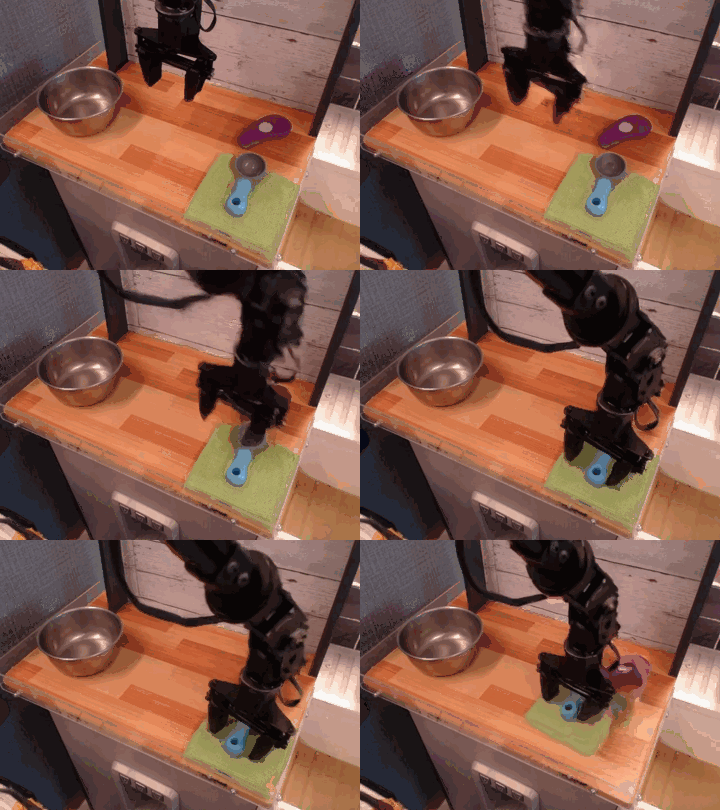
Same robot, same starting observation — different task prompt, different
imagined future and different predicted actions. This is the policy mode:
condition on a first observation, give it a task, get back the world it would
create and the action chunk (1, 16, 10) that gets there.
-
"Put the pot to the left of the purple item."
-
"Pick up the cloth and place it in the bowl."
-
"Move the gripper toward the metal pan and grasp the handle."
-
"Open the drawer and place the spoon inside."
-
"Wipe the surface with the cloth in a circular motion."
-
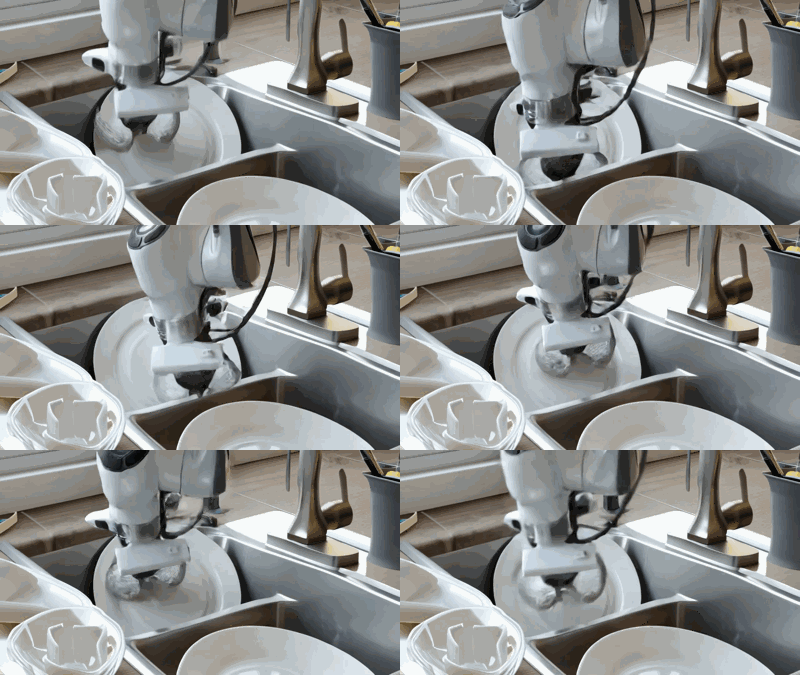
text-to-world (no action conditioning)
from strands_diffusers import use_diffusers

# 1) build an action condition from an observation video (low-level `call`)
use_diffusers(action="call", target="CosmosActionCondition",
              parameters={"mode": "policy", "chunk_size": 16,
                          "domain_name": "bridge_orig_lerobot",
                          "resolution_tier": 480, "video": "robot.mp4",
                          "view_point": "ego_view"},
              cache_key="cond")

# 2) run the world-foundation pipeline, threading the cached condition in
use_diffusers(action="run", pipeline="Cosmos3OmniPipeline",
              model="nvidia/Cosmos3-Nano",
              parameters={"prompt": "Put the pot to the left of the purple item.",
                          "action": "cached:cond", "fps": 5,
                          "num_inference_steps": 30, "guidance_scale": 1.0},
              dtype="bfloat16", device="cuda")
Each call above returned a world video (17, 480, 640, 3) and an action chunk
(1, 16, 10), normalized to [-1, 1].
The headline: world + action from one call
Three action modes
Cosmos exposes the full physical-AI loop through one CosmosActionCondition —
the same object, three directions through the world model:

flowchart LR
    subgraph In["conditioning"]
        F["first frame"]
        P["task prompt"]
        RA["raw actions"]
        OV["observed video"]
    end

    F --> Policy
    P --> Policy
    F --> FD
    RA --> FD
    OV --> ID

    subgraph Modes["CosmosActionCondition"]
        Policy["policy"]
        FD["forward_dynamics"]
        ID["inverse_dynamics"]
    end

    Policy --> WV["world video<br/><small>.mp4</small>"]
    Policy --> AC["action chunk<br/><small>.json · [-1,1]</small>"]
    FD --> WV
ID --> AC| mode | conditioning | predicts | use it for |
|---|---|---|---|
policy |
first frame + task prompt | future video + actions | "what should the robot do?" |
forward_dynamics |
first frame + given raw_actions |
future video | "what happens if I run these actions?" |
inverse_dynamics |
an observed video | the actions between frames | "what actions produced this?" |
# forward dynamics: roll the world forward from actions you already have
use_diffusers(action="call", target="CosmosActionCondition",
              parameters={"mode": "forward_dynamics", "chunk_size": 16,
                          "domain_name": "agibotworld", "resolution_tier": 480,
                          "image": "first_frame.png", "raw_actions": chunks},
              cache_key="fd")

# inverse dynamics: recover the actions from a video you observed
use_diffusers(action="call", target="CosmosActionCondition",
              parameters={"mode": "inverse_dynamics", "chunk_size": 16,
                          "domain_name": "bridge_orig_lerobot",
                          "video": "observed.mp4"}, cache_key="id")
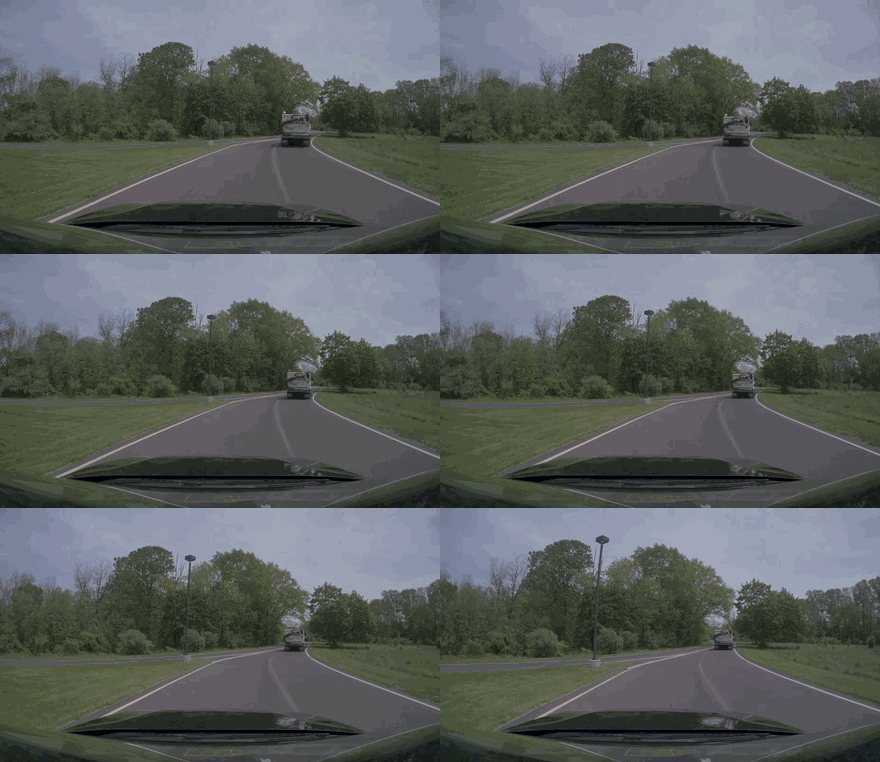
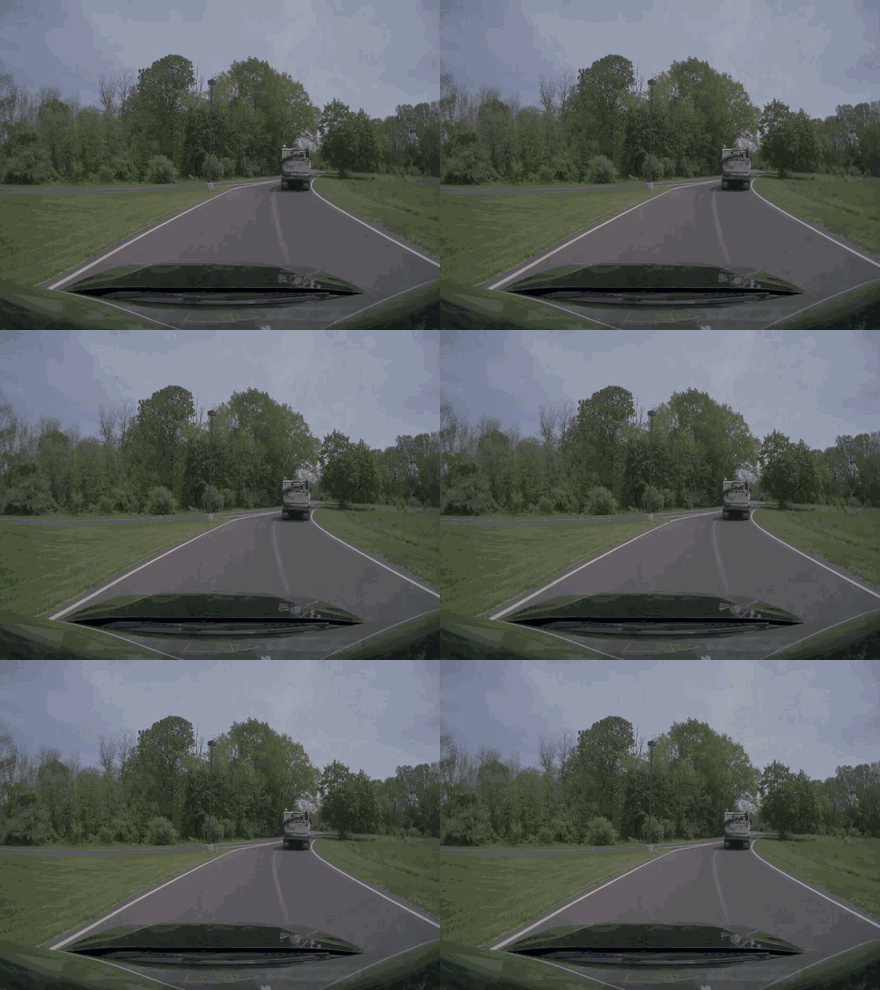
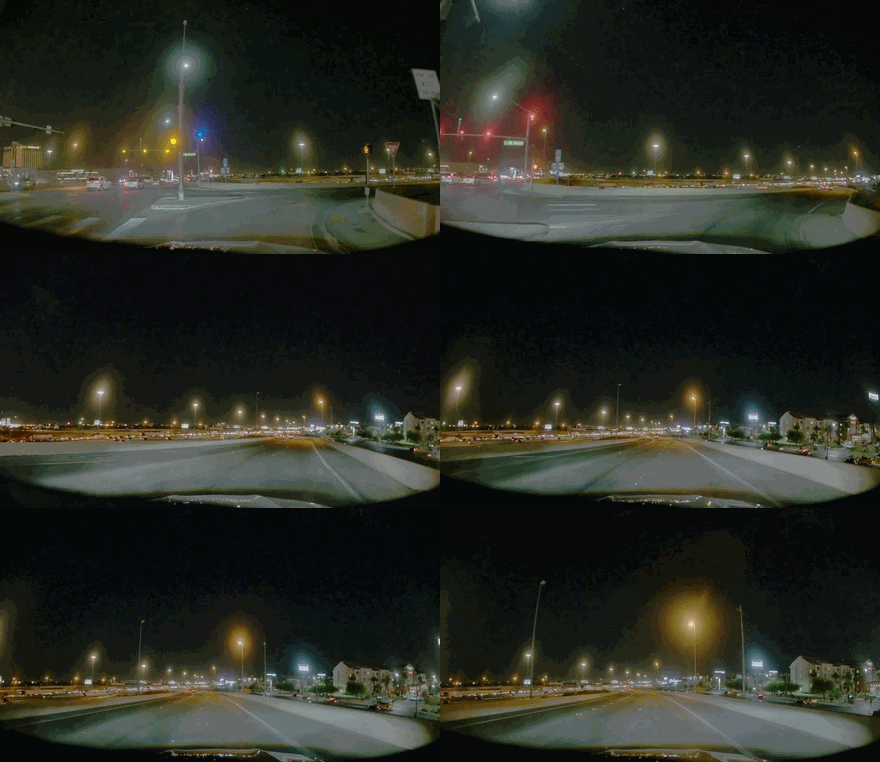
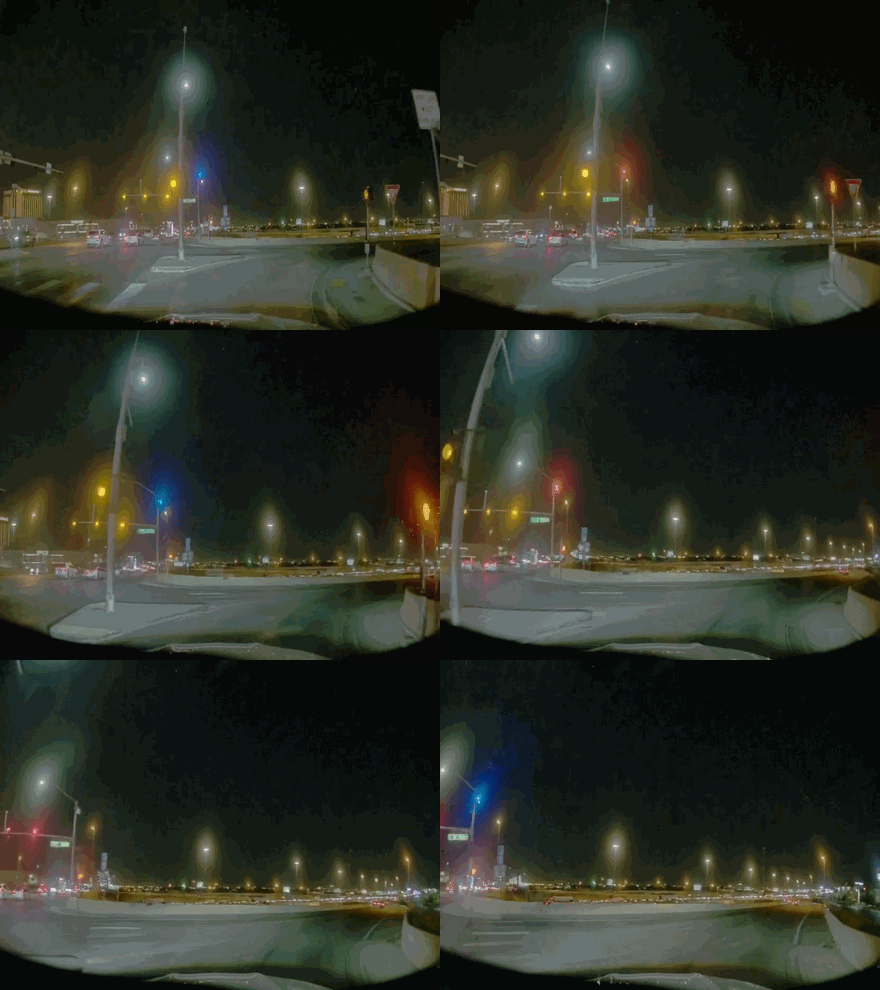
Inverse dynamics, seen
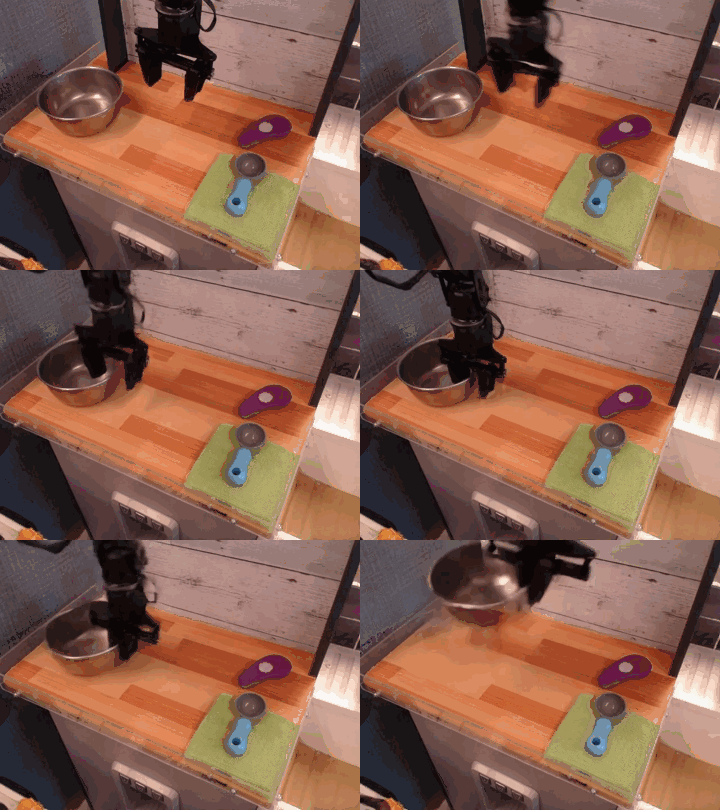
Feed an observed robot video; Cosmos reconstructs the world and infers the action chunk that connects the frames. Observed input (left) → model rollout (right):
See the motion
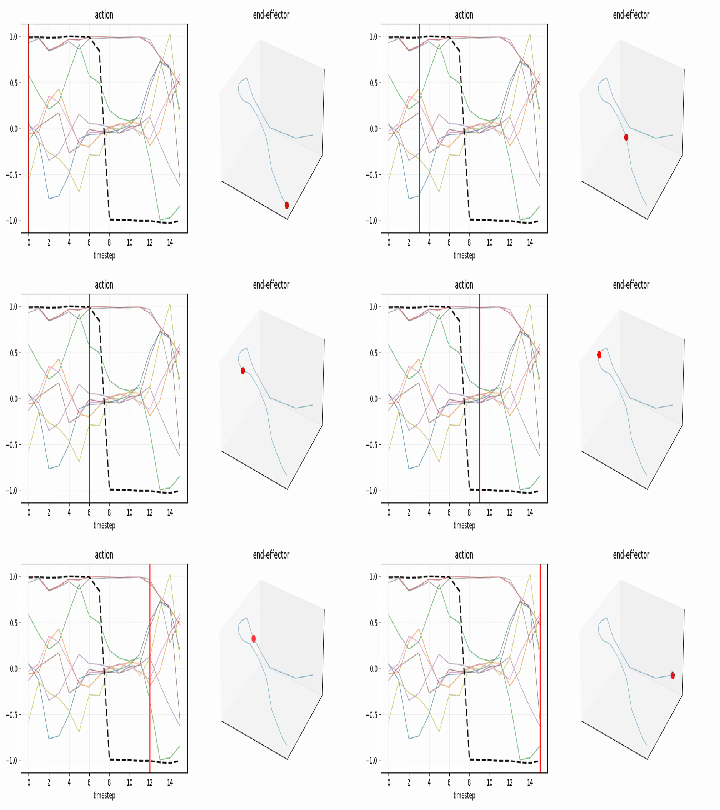
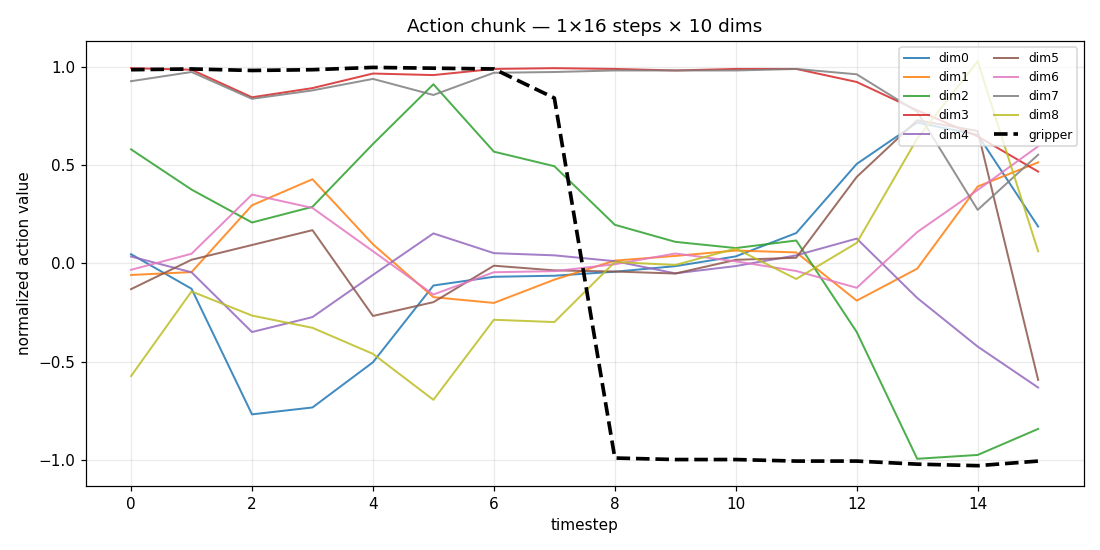
use_diffusers(action="visualize", ...) turns any action chunk into plots and an
animation so you can read the trajectory before you ever touch hardware:
| time-series (every dim, gripper highlighted) | end-effector path (dims 0–2) |
|---|---|
 |
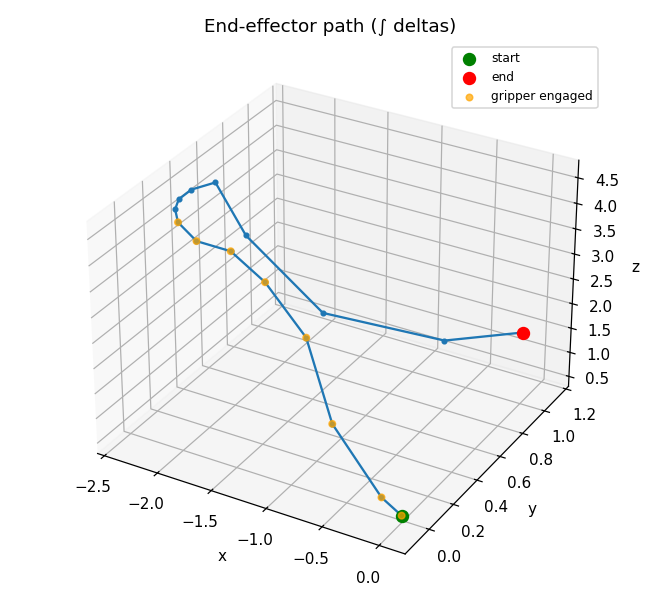 |
use_diffusers(action="visualize", inputs=action_chunk, parameters={"fps": 8})
# -> timeseries.png, trajectory.png, animation.mp4
What comes back
A Cosmos Cosmos3OmniPipelineOutput carries three fields, and the serializer
writes each to the right artifact — no opaque repr strings:
| field | artifact | notes |
|---|---|---|
video |
.mp4 |
future world, via export_to_video |
sound |
.wav |
optional audio track |
action |
.json |
normalized [-1, 1], shape [num_chunks, T, action_dim] |
{
  "type": "action",
  "chunk_shape": [16, 10],
  "num_chunks": 1,
  "path": "/tmp/strands_diffusers/action_*.json"
}
The .json is the model-normalized chunk (values in [-1, 1]). Feed it straight
to your embodiment's un-normalizer and controller. Values are preserved exactly
(no lossy clipping); bf16 tensors are upcast to f32 before serialization.
The WFM family
use_diffusers(action="wfm") lists every world-foundation / action-capable
pipeline diffusers ships — discovered at runtime, never hardcoded:
use_diffusers(action="wfm")
# ['Cosmos2TextToImagePipeline', 'Cosmos2VideoToWorldPipeline',
#  'CosmosTextToWorldPipeline', 'CosmosVideoToWorldPipeline',
#  'HunyuanVideoPipeline', 'WanImageToVideoPipeline', 'WanPipeline', ...]
27 world-foundation models today; the list grows automatically as diffusers adds new architectures.
Reproduce these
The rollout gallery above is generated by a real, GPU script:
pip install 'git+https://github.com/huggingface/diffusers' --no-deps --target /tmp/dmain
PYTHONPATH=/tmp/dmain python examples/generate_wfm_rollouts.py
See also examples/cosmos_action_policy.py
for the single-rollout walkthrough with a graceful CPU/no-GPU fallback.