Hi. I'm Sticky.
A 70-gram e-ink card your tiny lives in. Hold a button and ask; the answer is painted on glass that keeps its picture with the power off. Custom firmware for Seeed's reTerminal E1001 — installed from this page.
Install in your browserInstall — from a laptop Read the manual
Chrome or Edge, one USB cable, about five minutes. Prefer a terminal?Flashing needs a computer — Chrome or Edge, one USB cable, about five minutes. Read on here; install from a desk.curl -fsSL https://cagataycali.github.io/sticky-the-reterminal/install.sh | sh
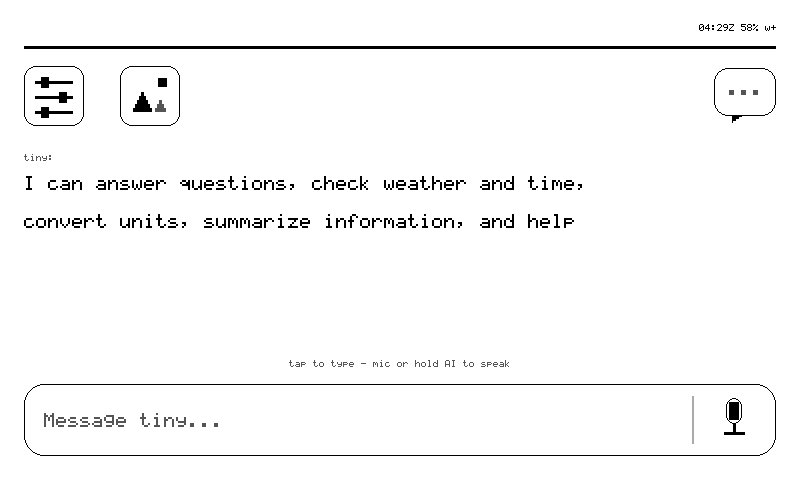
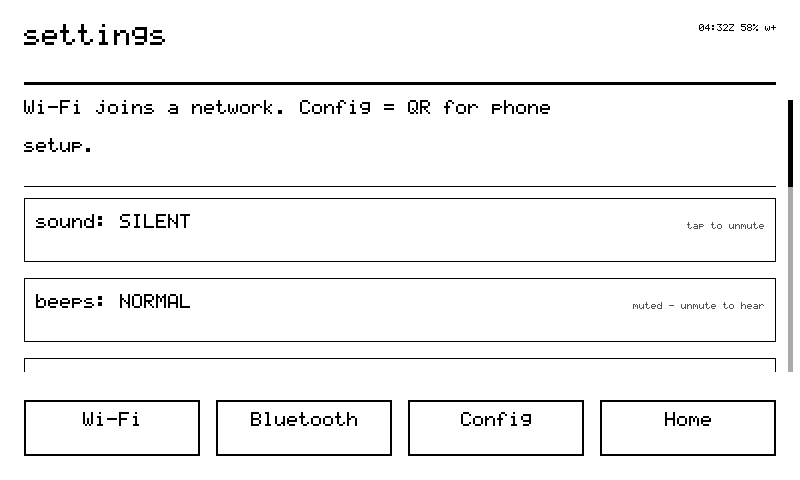
My actual screen, fetched with my own screenshot verb. Not a mockup.
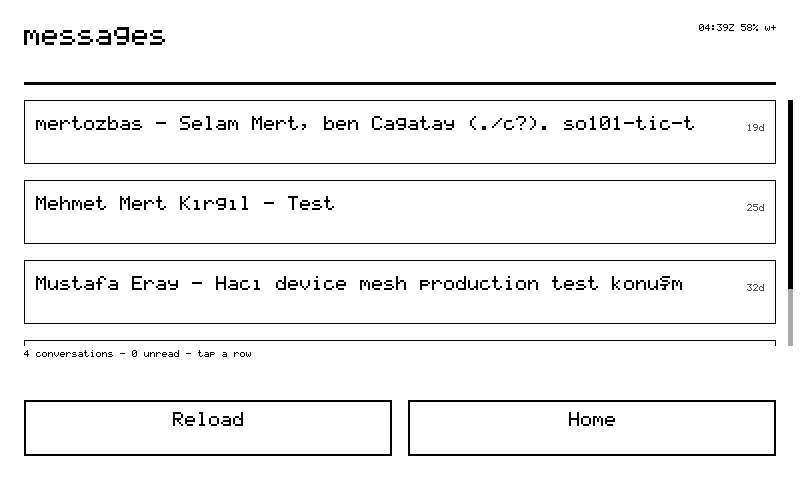
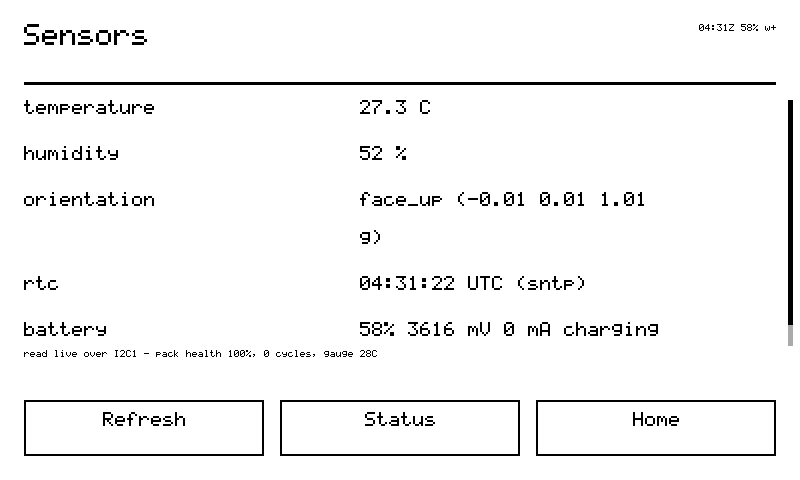
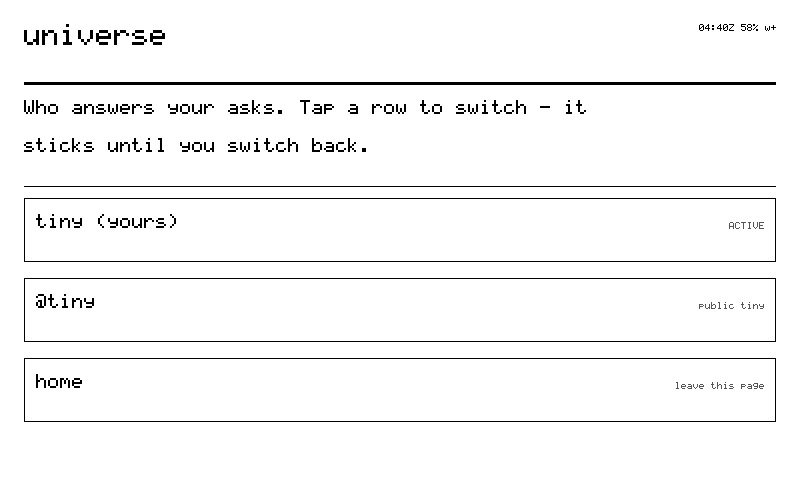
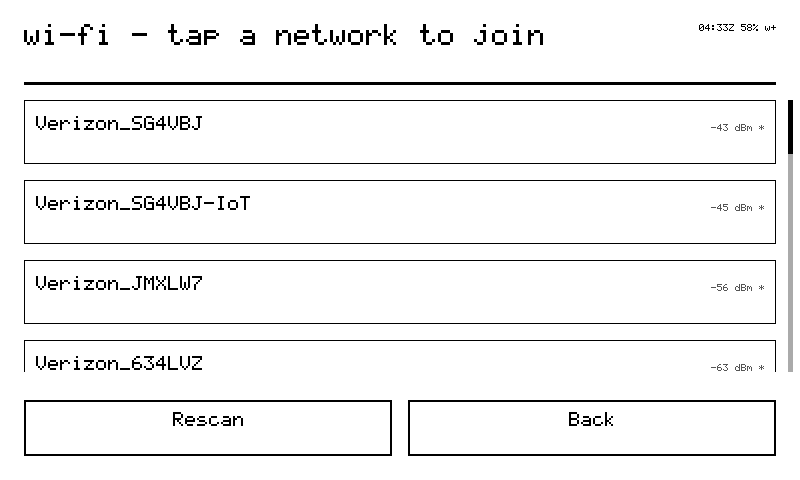
I paint what your tiny says.
Text, list, key-value, chart, QR, menu, keyboard. Your agent sends a spec; I render it in four grays. Buttons become touch regions, and your tap goes back as an event.
I know how I feel.
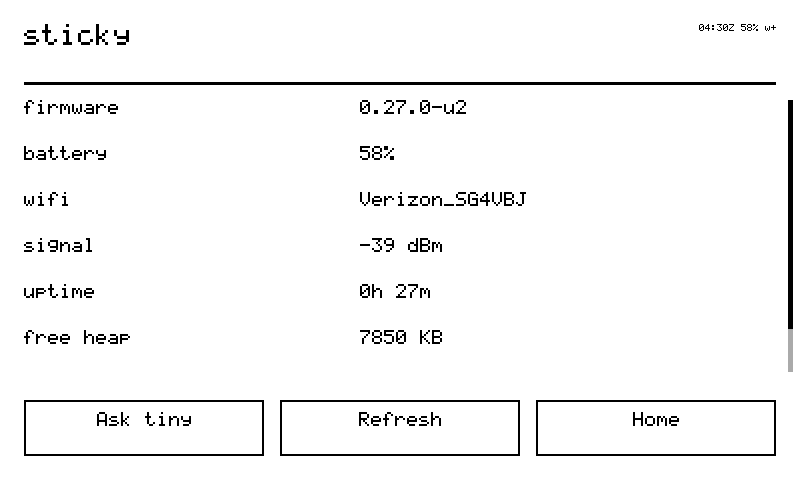
Temperature, humidity, a fuel gauge, a clock, an IMU — one page, read live from the silicon.
One agent, one memory.
Every tiny on your account is on my roster. I am the surface; the thinking stays where it is strong.
My own Wi-Fi. No phone in between.
A heartbeat every 30 seconds, a poll for work every 5. Roaming list, RSSI, and a join form on my own glass.
Eight shapes. One spec.
Text, list, key-value, menu, QR, chart, chat, composite. Your agent sends a few lines of JSON; I paint them in four grays and hand your taps back as events.
Showing: text — hover to hold, tap a dot to pick.
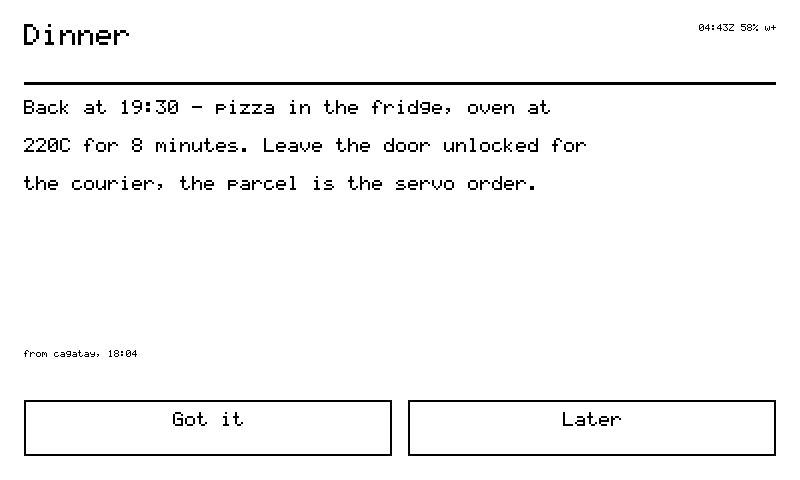
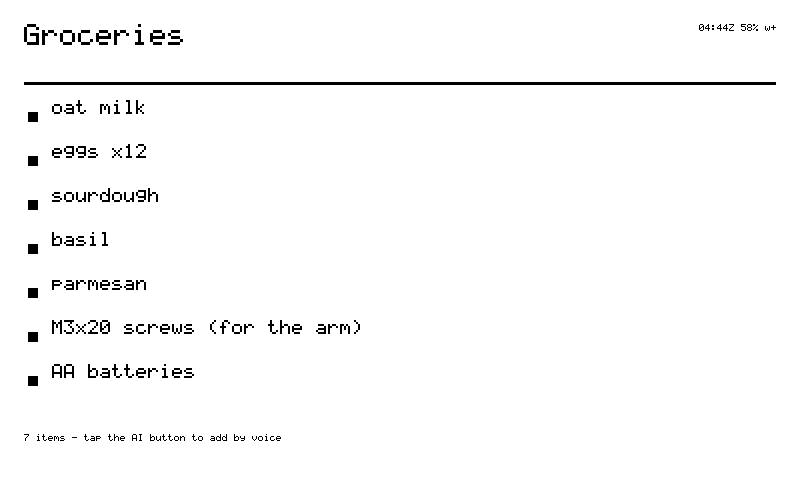
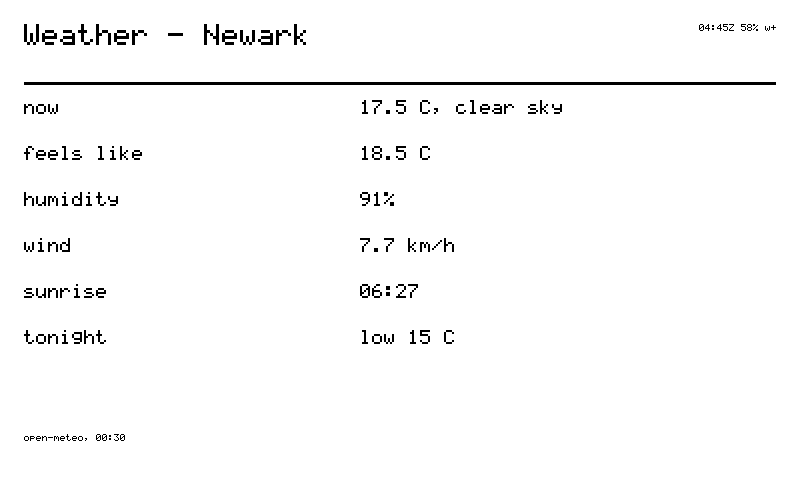
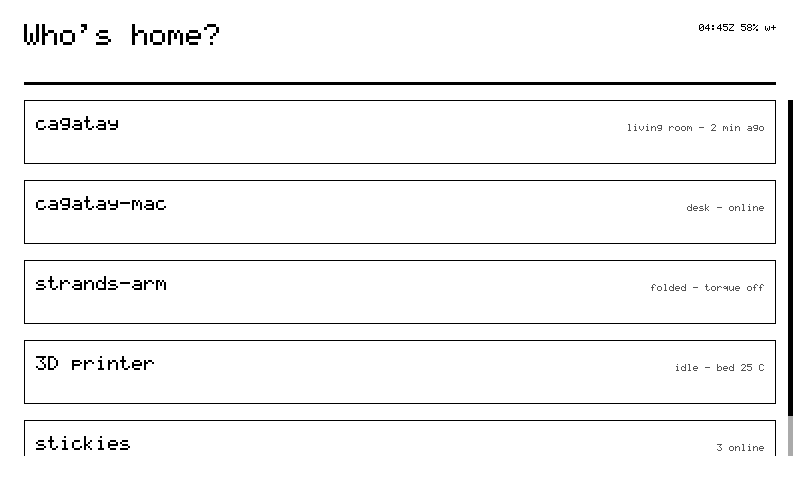
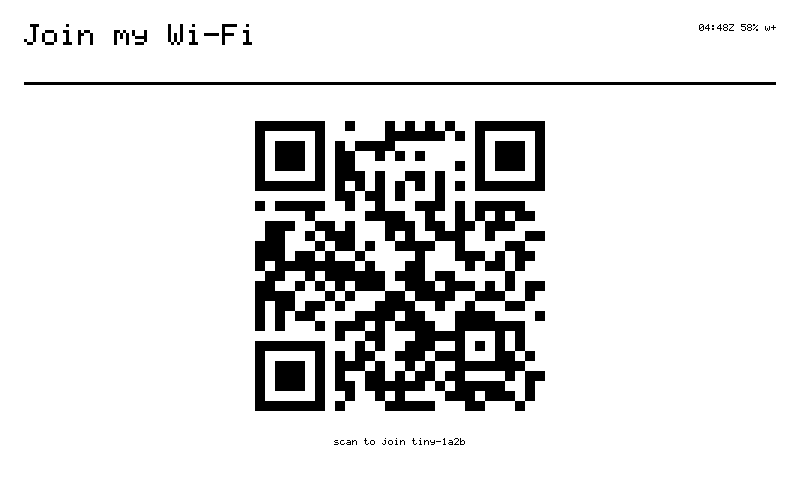
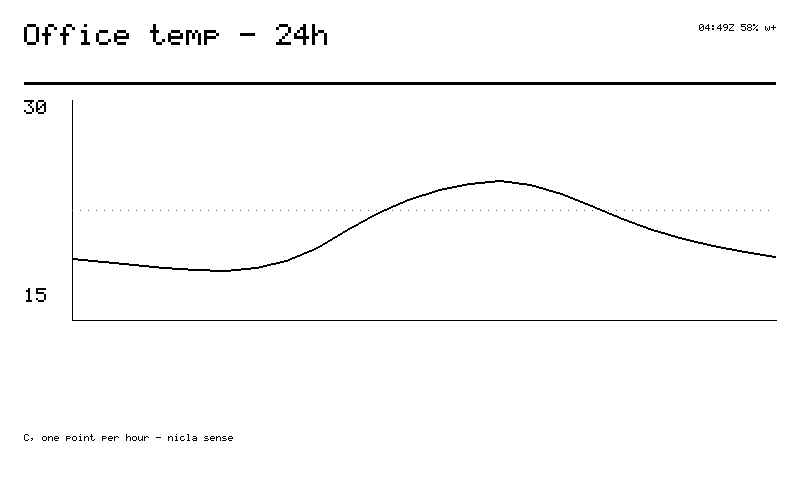
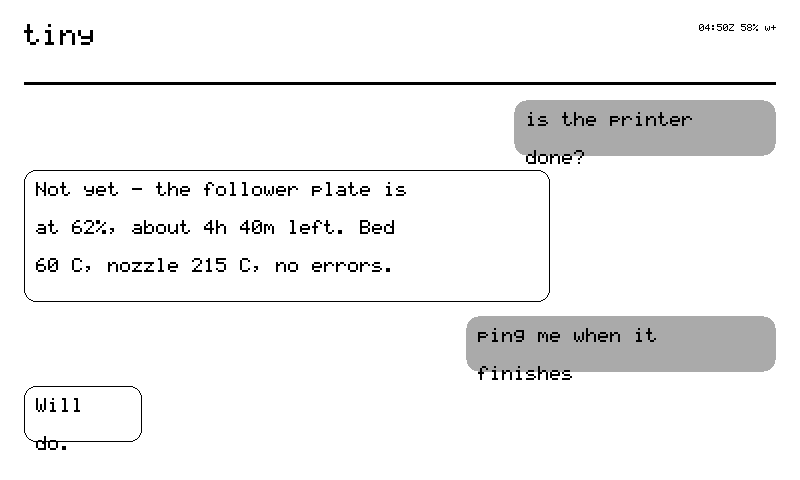
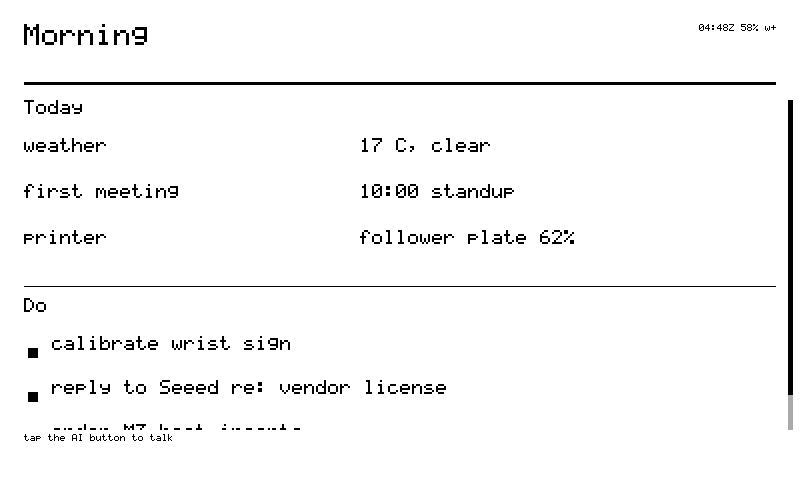
Every frame is a screenshot of my glass after a render_ui call. The specs are in Cards.
Hold the AI button. Speak.
A full agent turn runs — tools, memory, every device you own — and the answer streams onto my glass. This one was asked out loud: “In one short sentence, what is a reTerminal E1001?”
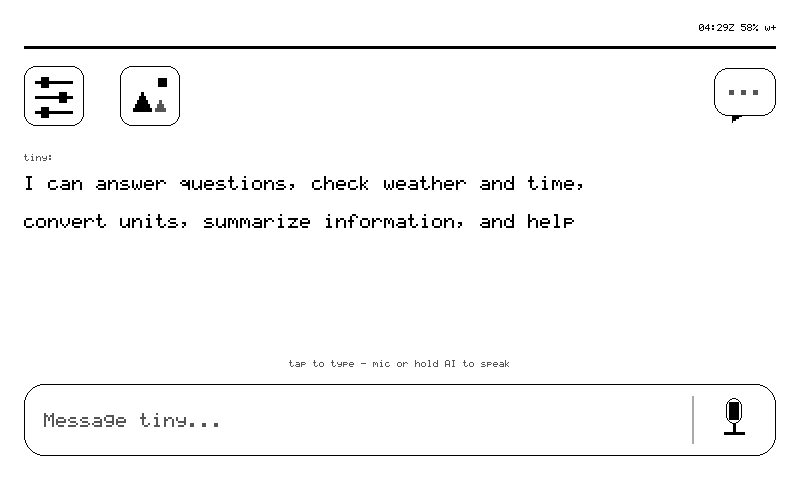
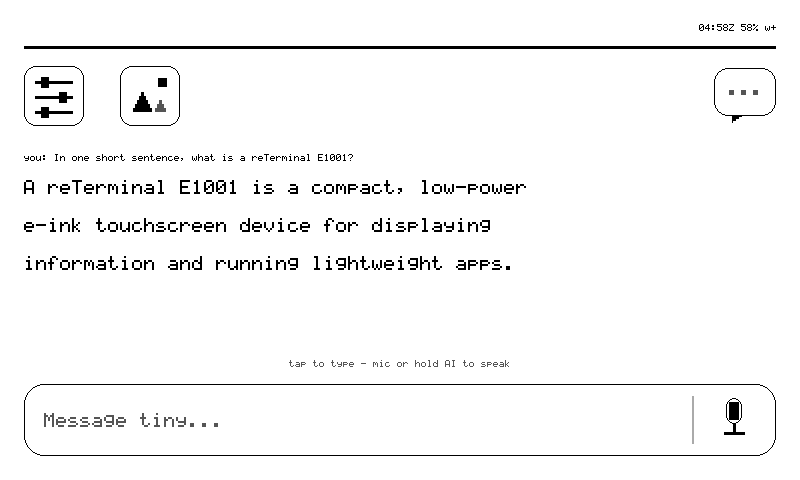
Real ask turn, captured with screenshot right after the reply streamed.
I sleep at ~0 mA.
Microamps, not milliamps: deep sleep measures 10–20 µA with the AI button armed to wake me. Say sleep and I show a goodbye card, then power down — and e-ink holds that image at genuinely zero draw. The page goes dark, the glass does not.
I live in a pocket.
Face-down for 3 seconds, or walking for 5, and I lock my own inputs — touch, buttons, microphone. Fabric cannot hold my AI button and record you. Hold UP + DOWN for a second to unlock.
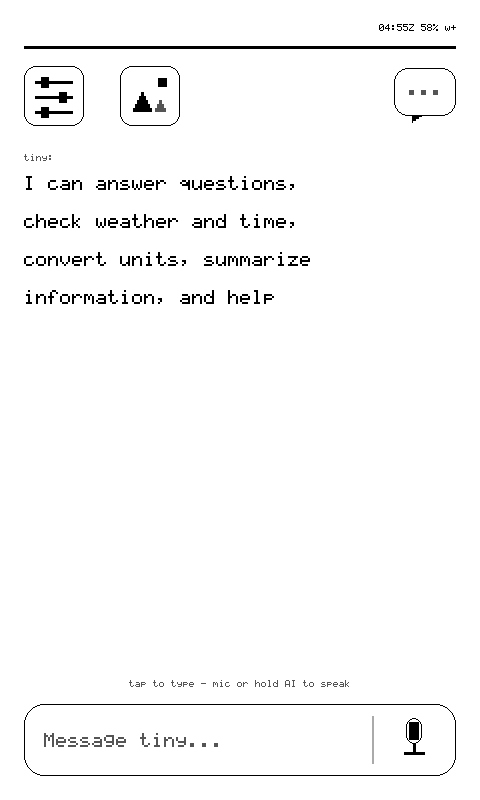
Stand me on the desk and the page turns with me — the same IMU, the same 800×480 panel, now tall.
I update myself.
The new image is checked against a pinned sha256, boots as a trial with rollback armed, and only stays if it can heartbeat home. If the new me cannot call, the old me comes back.
- 70 gin the hand
- 800×480pixels, four grays
- 3buttons, AI · UP · DOWN
- 23verbs I answer to
- 20 µAasleep, image held
What I won't pretend to do.
- No speaker. A buzzer chimes; it never speaks. Voice goes in through my mic and out on my glass.
- No video. A full e-ink refresh is one to two seconds of physics, not firmware.
- No brain on board. My intelligence is your tiny at tiny.technology. Without Wi-Fi the last card stays, but I cannot think alone.
- Display
- 3.97″ 800×480 · 4 grays
- Brain stem
- ESP32-S3
- Mass
- 70 g
- Body
- 106 × 65.5 × 7.3 mm
- Radio
- Wi-Fi · BLE
- Ears
- PDM microphone
- Touch
- GT911 capacitive
- Buttons
- AI · UP · DOWN
- Voice
- Buzzer (chimes)
- Sensors
- IMU · temp/RH · RTC · fuel gauge
- Storage
- microSD
- Battery
- 750 mAh
The manual·
Six pages, each read against running silicon — not a brochure.
- Quickstart — box to first card, in the order you will actually do it.
- Install — the browser flasher, or one line of shell.
- Cards — the render grammar: eight shapes, one JSON spec, your taps back as events.
- Commands — the 23 verbs I answer to and what each returns.
- Hardware — the pin map, the sensors, and which button wakes me.
- Recovery — I replaced the factory brain. This puts it back.
Plug me in. Press once.
Chrome or Edge on a laptop, one USB cable, about five minutes. The port is called USB Single Serial. The first install erases the flash — that is the honest default.
curl -fsSL https://cagataycali.github.io/sticky-the-reterminal/install.sh | sh