Home
🤗 transformers · 🧬 strands agents
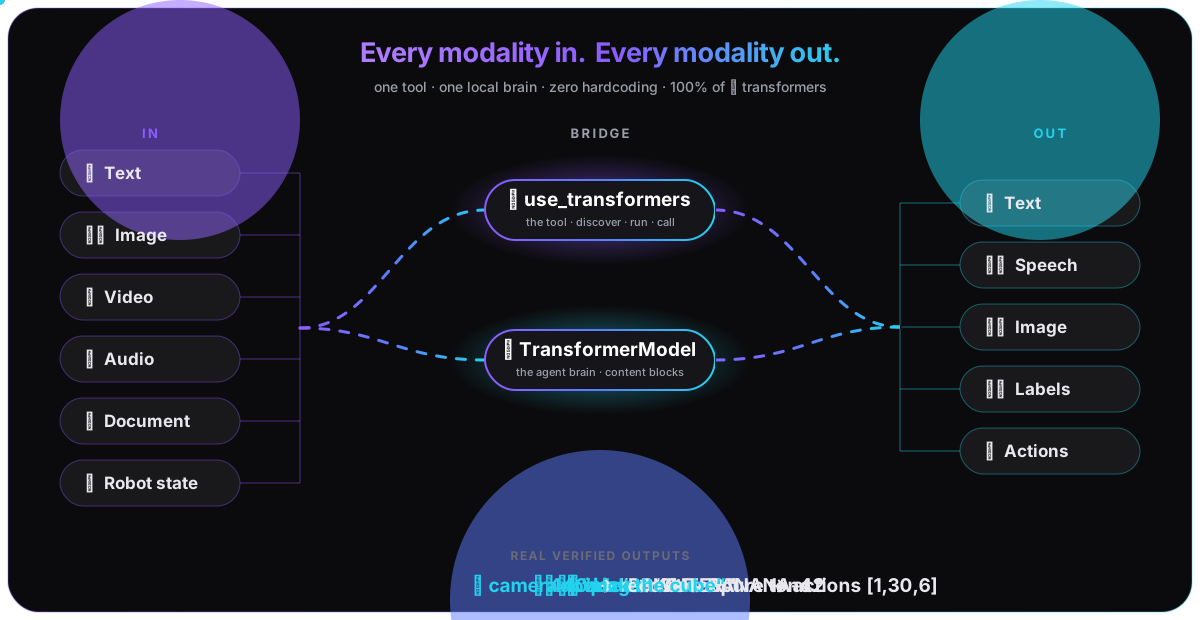
Run any HuggingFace transformers model from a Strands agent - as a tool for all 24 tasks, or as the agent's own multimodal brain. Local, no API keys.
# /// script
# dependencies = ["strands-transformers[vision]"]
# ///
import io
from PIL import Image
from strands import Agent
from strands_transformers import TransformerModel

png = io.BytesIO(); Image.new("RGB", (64, 64), (20, 200, 40)).save(png, "PNG")
agent = Agent(model=TransformerModel(model_path="HuggingFaceTB/SmolVLM-256M-Instruct"))
print(agent([{"image": {"format": "png", "source": {"bytes": png.getvalue()}}},
             {"text": "Color? One word."}]))
A 256M vision-language model, wired into the standard agent loop, seeing pixels - in a dozen lines. Run any snippet in these docs the same way.
Why this exists
Wiring HuggingFace into an agent usually means bespoke glue for every model -
the right AutoModel class, processor, device, dtype, and a custom decode for
each task. It rots the moment transformers ships a new task or you swap models.
strands-transformers deletes that work. It reads transformers' own task taxonomy
at runtime (SUPPORTED_TASKS),
so nothing is hardcoded per task: a new task or model upstream just works here,
no code change. You get one way in - through an agent.
Two entry points
-
use_transformers- the tool
One tool exposing every transformers task. Discover the taxonomy at runtime, run a pipeline, or call any class/method directly. New model or task upstream ⇒ works here with no code change.
-
TransformerModel- the brain
Plug a local HF model in as
Agent(model=…). It speaks the agent content-block protocol -image,video,audio,documentreach the model directly. VLMs see, audio models hear, Qwen2.5-Omni speaks back.
See it - and hear it
Every result below is real model output, reproducible from the linked example.
| You send | Model | You get back |
|---|---|---|
| 🖼️ green image + "Color?" | SmolVLM | "Green." |
| 🎬 brightening frames | SmolVLM2-Video | "BRIGHTER." |
| 🧰 tool returns a screenshot | SmolVLM | "Blue." |
| 📄 a text document | Qwen3 | recovers BANANA-42 |
| 🔊 a 440 Hz tone | Qwen2.5-Omni | "It's a pure tone." |
| 🦾 camera + "pick the cube" | MolmoAct2 | actions [1,30,6] |
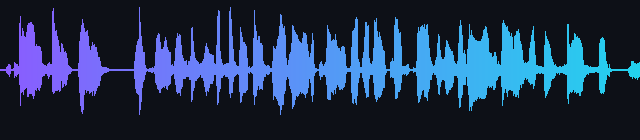
Hear the library explain itself - generated by text-to-audio, then
re-transcribed by whisper to prove it's real speech:
Real agent outputs - detection · depth · panoptic segmentation:

🎬 video understanding · 🔊 generated speech (the library narrating itself):

Run any snippet
Code blocks here are self-contained PEP 723
scripts - dependencies live in the header. Save one as demo.py:
uv builds a throwaway env with the right extras and runs it. No pip install,
no venv to manage.
What you can build
- 🗣️ Voice assistant - speak to it, it speaks back (Qwen2.5-Omni), one local model.
- 🤖 Robot controller - camera + instruction → joint actions (MolmoAct, OpenVLA).
- 👁️ Screen-watcher - a tool returns a screenshot; the VLM reasons over it.
- 📄 Document Q&A - drop a doc block in the conversation, ask about it.
- 🎬 Video understander - pass frames, ask what changes over time.
- 🔌 Any HF task - ASR, detection, segmentation, embeddings… via one tool.
Where next
- New here → Installation · Quickstart
- See & hear → Content blocks · Audio
- Robotics → Robotics / VLA
- Internals → Architecture · API